Marsh-wiggles
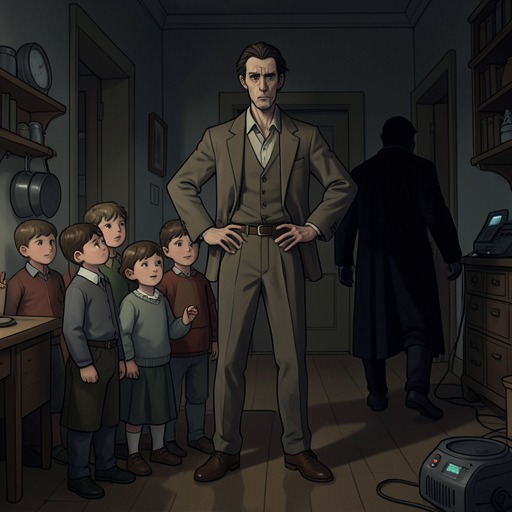
The Silver ChairThe Marsh-wiggles are Narnia’s inhabitants of the marshes: private, water-adapted people whose work includes fishing, ferrying, and other watery and fishy occupations. Their landscape is not merely their home but a source of knowledge and practical aid. Through Puddleglum, the most prominent Marsh-wiggle in the story, they become indispensable to Jill and Eustace’s search for Prince Rilian, accompanying the children through hardship and, eventually, out of the collapsing Underland.## Habitat and way of lifeThe children first encounter Marsh-wiggles in a country of flat marsh divided into countless small islands by channels. Reeds and rushes edge the islands, birds gather in the wetlands, and the Marsh-wiggles live in separate wigwams, set well apart because they like privacy. The place changes character with the weather: morning sun and a fresh wind make its loneliness seem clean and invigorating, even though the same marsh would feel depressing on a wet evening. Water, open ground, and exposure to the elements define the setting in which the Marsh-wiggles live and move.Puddleglum is nearly hidden in this landscape when Jill and Eustace first see him, sitting still with his back to them and fishing about fifty yards away. His muddy complexion and greeny-grey, reed-like hair visually blend with the marsh. His long legs and arms make him taller than most men when he stands, although his body is not much larger than a dwarf’s; his hands and bare feet are webbed, and his loose, earth-coloured clothes hang above the water. The description presents him as a person adapted in appearance and manner to his wetland surroundings, not as a human visitor passing through them.The community’s habits are practical and distinctive. Puddleglum fishes for eels, skins and cleans his catch, cooks it in a large pot, and smokes a heavy tobacco whose black smoke trickles downward along the ground rather than rising. Later, the narrative explains that Marsh-wiggles do most of Narnia’s watery and fishy kinds of work. At Beruna, the river crossing is handled by a ferry-wiggle, showing that this occupation belongs to a wider community role rather than being an eccentricity of Puddleglum alone.## Puddleglum and the northern searchWhen the Owls cannot accompany the children on their journey to the ruined city of the giants, Glimfeather recommends taking them to a Marsh-wiggle, since Marsh-wiggles are the people most likely to help. Puddleglum receives Jill and Eustace on the marsh and joins their search for the lost Prince. His opening manner is solemn and discouraging: even a good morning, he suggests, may turn to rain, snow, fog, or thunder. When the children say they slept well, he interprets their answer as putting a good face on a bad job. That outlook becomes a recurring comic contrast with the children’s hopes, but it does not amount to withdrawal or indifference.Puddleglum uses talk to manage discomfort as well as to set expectations. While the eels cook, he anticipates hunger and begins to mention a story about a little girl, then declines to tell it because it might lower the children’s spirits. He turns instead to discussing their plans. Asked whether he can help find Prince Rilian, he questions how far anyone can get on a northward journey with winter approaching, enemies, mountains, rivers, the risk of losing their way, little food, and sore feet. His forecast makes the expedition sound almost hopeless, yet he remains engaged with its practical conditions and consequences.The children’s growing interest in Harfang brings the difference between his words and his commitments into focus. They want to visit the Gentle Giants after enduring wind, rain, poor food, and cold ground. Puddleglum opposes the plan: he does not know what a giant might mean by being gentle, and Aslan’s signs have not instructed them to stay with giants. When he finally agrees to go, he insists that the children promise not to tell the giants that they come from Narnia or that they are seeking Prince Rilian unless he gives permission. The promise shows his caution in action: the journey’s comforts and apparent hospitality may bring risks the travellers cannot judge in advance.The country worsens after the conversation with the Lady. Narrow valleys funnel a cruel north wind into the travellers’ faces; they find no firewood or sheltered hollows, and stony ground makes their feet sore by day and their bodies sore at night. Meanwhile, the thought of beds, baths, and hot meals at Harfang displaces their attention from Aslan and the lost prince. Jill stops repeating the signs to herself morning and night, first blaming tiredness and then forgetting them. The anticipated comfort makes the travellers more self-pitying and irritable, while Puddleglum’s earlier resistance stands as a warning they have not heeded.## Underland and the return to the signsOnce the travellers descend into the underground country, Puddleglum’s steadiness acquires a different force. A pale lantern gives only a little light aboard the boat on the dark water; ahead lies a surface fading into absolute blackness. Jill despairs about what will become of them, but Puddleglum answers by locating their immediate situation within the quest’s instructions: they are beneath the Ruined City, where they were meant to go, and are following the directions again. The same matter-of-fact companion who emphasized the dangers of the northern road can recognize when the travellers have returned to the route they were supposed to follow.His practical outlook also extends to interpreting danger. When fire and rising water overtake the Witch’s kingdom, Puddleglum identifies the disaster as a chain of spells arranged to make the whole realm fall apart when the Witch is killed, so that her killer might be burned, buried, or drowned afterward. Later, when Golg and the other gnomes appear to be forming military ranks, Puddleglum refuses to accept that they are simply fleeing. He asks Golg to tell him directly whether they were preparing to fight. Golg confirms that they had expected the Witch to remain in control and were ready to fight rather than surrender their hope of returning to Bism. The exchange reveals Puddleglum’s caution as active scrutiny: he questions appearances before deciding that a group is harmless.The rising flood turns that caution into urgent movement. As the travellers make their escape, Puddleglum warns that they have probably stayed too long, but they continue along the lamp-lit route. At the valley bottom, the tide is running uphill like a mill-race. It is still only a foot or two deep, so the horses carry the company across safely, though the water swishes around their legs. Behind them, the flood spreads until the hills of Underland are islands and distant lamps disappear. Puddleglum’s concern about delay is borne out by the landscape itself: escape depends not only on knowing the way but on reaching it before the waters overtake them.## Rescue and Marsh-wiggle workAfter the company reaches the hillside, digging opens a black chasm through which Puddleglum emerges first, leading two horses, followed by Prince Rilian. The Narnians immediately recognize Puddleglum as an old Marsh-wiggle from the Eastern Marshes. They call out that search-parties have been looking for him and that Lord Trumpkin has put up notices and offered a reward. Their welcome establishes that Puddleglum, too, has been missing during the events below ground; his return is a reunion with his own country as well as the culmination of the rescue.The Marsh-wiggle’s return is part of a larger communal effort. Dwarfs dig through the hillside, Moles join the work, and Fauns carry earth away in little barrows while other Narnians wait to see their friends freed. The opening they make allows Puddleglum and Rilian to come out of the underground darkness into the moonlight. In this scene Puddleglum is not merely the guide who brought two children on a quest: he is one of the people whose rescue the gathered community has been waiting to celebrate.Afterward, the party travels by horse through Narnia and crosses the river near Beruna on a flat barge operated by a ferry-wiggle. This brief crossing gives concrete form to the narrative’s description of Marsh-wiggles as workers in watery and fishy occupations. They belong not only to their marshland homes but to the working life of Narnia’s rivers.## Later life and significancePuddleglum remains in Narnia after the rescue. When King Caspian dies, Rilian buries his father and rules Narnia well; Puddleglum’s foot, injured during the adventures, is as good as new in three weeks. The story retains his characteristic outlook even in the happier years of Rilian’s reign: he often points out that bright mornings bring wet afternoons and that good times cannot be expected to last. The pessimism is recurring comedy, but it is paired with a record of loyalty and action: he accepts a dangerous journey, insists on caution when the others are drawn toward comfort, recognizes when the quest has returned to its intended path, and helps the group escape as the underground world floods.The opening into the hillside is left open. On hot summer days, Narnians go down with ships and lanterns to sail across the cool, dark underground sea, singing and telling stories of cities beneath the water. That continuing traffic links the surface country to the world the travellers escaped and turns the breach into a lasting place of passage. Together, the ferry-wiggle at Beruna and Puddleglum’s return from Underland show the Marsh-wiggles in distinct but related roles: as people whose knowledge and labour make movement through Narnia’s waterways possible, and as individuals whose apparently gloomy speech can accompany persistent, consequential service.